
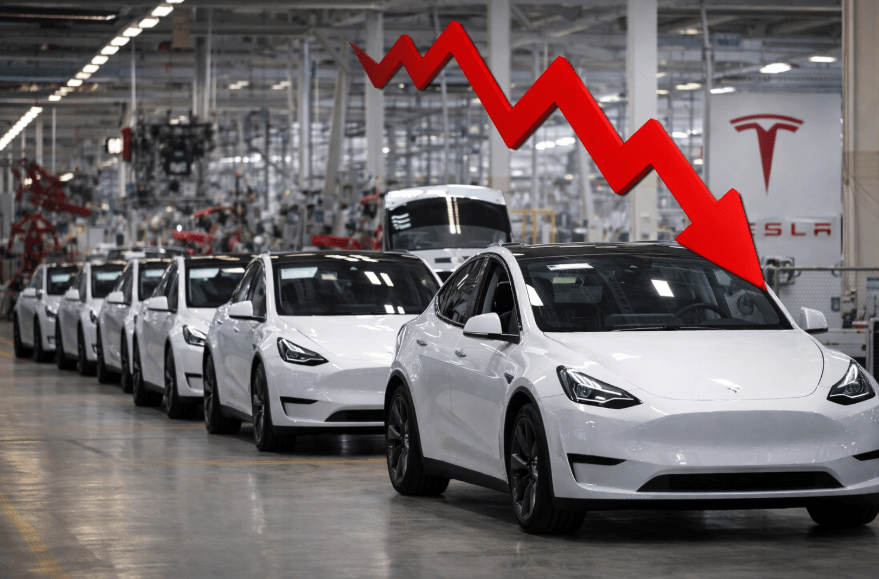
Tesla is back in the spotlight on Wall Street after a weaker-than-expected first-quarter delivery report rattled investor confidence. While the electric vehicle maker continues to grow, the latest numbers suggest that demand may not be keeping pace with production—raising new questions about the company’s trajectory in an increasingly competitive U.S. EV market.
Tesla Stock Drops Sharply After Q1 Report
Shares of Tesla (TSLA) remain under pressure following the company’s Q1 2026 delivery update. The stock fell more than 5% in a single trading session to close at $360.59, marking its steepest one-day decline this year.
Despite a modest rebound in premarket trading, Tesla stock is still down დაახლოებით 27% from its 52-week high of $499. For a company long viewed as a growth leader in the U.S. tech and automotive sectors, that drop is significant.
While deliveries rose 6% year over year, investors appear unimpressed. In today’s market environment—where high interest rates and tighter consumer spending are shaping demand—incremental growth is no longer enough to justify Tesla’s premium valuation.
What the Delivery Numbers Reveal
Tesla reported 358,023 vehicle deliveries for the first quarter, falling short of Wall Street expectations of roughly 381,000 units.
However, the bigger concern isn’t just the miss—it’s the widening gap between production and deliveries.
The company produced more than 408,000 vehicles during the same period, leaving over 50,000 units unsold. For Tesla, this is a notable shift. Historically, strong demand has kept pace with output, particularly in key U.S. markets like California and Texas.
This imbalance is now prompting concerns that demand may be softening, especially as consumers face higher borrowing costs and fewer government incentives compared to previous years.
Wall Street Divided on Tesla’s Outlook
Analysts remain split on what comes next for Tesla, reflecting broader uncertainty across the EV sector.
Bullish View: Long-Term Innovation Still Strong
Dan Ives of Wedbush Securities maintained a Buy rating on Tesla, with a $600 price target. While acknowledging the disappointing delivery figures, Ives emphasized Tesla’s long-term potential in artificial intelligence and autonomous driving—areas where the company continues to invest heavily.
Bearish Concerns: Demand and Pricing Pressure
Other analysts are taking a more cautious stance.
CFRA Research lowered its price target to $325, citing weaker demand trends and a more challenging pricing environment.
Meanwhile, William Stein reduced his target to $400, noting that both vehicle deliveries and energy storage performance came in below expectations. He also flagged intensifying competition—from both legacy automakers and newer EV entrants—as a growing risk.
Macro Pressures Weigh on EV Demand
Several broader economic factors are also impacting Tesla’s performance in the U.S.
The expiration of the $7,500 federal EV tax credit at the end of last year has reduced incentives for buyers. At the same time, elevated interest rates have made auto loans more expensive, dampening consumer demand across the auto industry.
These headwinds are not unique to Tesla but are particularly relevant given its scale and reliance on continued growth.
What Investors Are Watching Next
All eyes are now on Tesla’s upcoming earnings report, scheduled for April 22. The release is expected to provide deeper insight into the company’s financial health and forward outlook.
Wall Street forecasts earnings per share (EPS) of $0.40, representing a 48% increase year over year. Revenue is projected to reach $22.79 billion, up 18% compared to the same period last year.
Investors will be closely monitoring:
- Demand trends across key markets
- Vehicle pricing and profit margins
- Updates on production strategy
- Progress in AI and autonomous driving initiatives
These factors will likely determine whether the recent delivery miss is a temporary setback or a sign of more persistent challenges.
Is Tesla Stock a Buy, Sell, or Hold?
At present, Wall Street holds a consensus “Hold” rating on Tesla stock. Among analysts, 13 recommend buying, 11 suggest holding, and eight advise selling.
The average price target of approximately $394 implies a modest upside of around 9% from current levels—indicating cautious optimism, but far from the strong bullish sentiment Tesla once commanded.
Conclusion
Tesla’s latest delivery report has exposed a potential shift in the balance between supply and demand, a dynamic that investors are watching closely. While the company remains a leader in innovation and EV technology, mounting economic pressures and rising competition are testing its growth narrative. The upcoming earnings report will be critical in determining whether Tesla can regain momentum—or if further volatility lies ahead.

“Amateur introvert. Reader. Coffee aficionado. Professional music maven. Bacon practitioner. Freelance travel nerd. Proud internet scholar.”



More Stories
LaGuardia Airport Delays Expected to Last Days After Fatal Runway Collision
Surge in Oil Prices Raises Fears of Economic Shock as Iran Tensions Escalate