

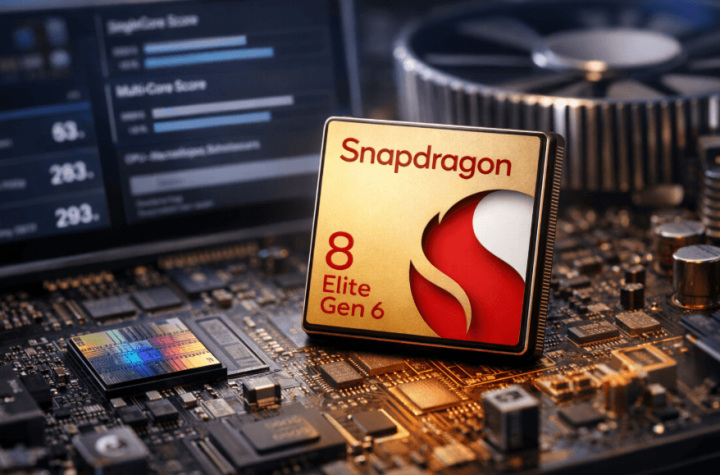
Qualcomm’s next-generation flagship mobile processor is expected to arrive later this year with major architectural changes and a transition to a cutting-edge 2-nanometer manufacturing process. However, a new rumor suggests the anticipated leap in CPU performance may fall short of expectations, even as improvements in graphics and artificial intelligence could help balance the overall package.
Modest CPU Gains Reported for Next-Gen Snapdragon Chip
According to early reports, the Snapdragon 8 Elite Gen 6 Pro may deliver less than a 20% increase in CPU performance compared to its predecessor, the Snapdragon 8 Elite Gen 5. That would be a relatively modest gain for a chip built on a significantly more advanced fabrication process.
The upcoming processor is expected to adopt a redesigned “2 + 3 + 3” CPU cluster, replacing the previous “2 + 6” configuration. This shift could improve efficiency and thermal performance, potentially allowing the chip to sustain higher clock speeds—reportedly up to 5.0 GHz.
In theory, those speeds should translate into stronger single-core and multi-core performance, which are critical for everyday smartphone responsiveness and demanding applications. However, industry tipster Fixed-focus digital cameras claims that real-world gains may not match expectations.
GPU and Memory Upgrades Could Offset CPU Limitations
While CPU improvements may be limited, Qualcomm appears to be focusing heavily on graphics performance and memory enhancements.
The Snapdragon 8 Elite Gen 6 Pro is rumored to feature the new Adreno 850 GPU, which could include a larger cache and support for next-generation LPDDR6 RAM. Additional reports suggest a 50% increase in memory bus width and expanded GPU memory capacity.
These upgrades are significant. In practical terms, they could deliver smoother gameplay, higher frame rates, and better performance in graphics-intensive applications such as mobile gaming and augmented reality.
For U.S. consumers—where mobile gaming continues to grow alongside console and PC gaming—these improvements could be especially relevant. High-end smartphones are increasingly expected to handle console-quality titles, and GPU advancements play a central role in meeting those expectations.
Stronger Focus on On-Device AI Performance
Another area likely to benefit from the upgraded GPU and memory architecture is on-device artificial intelligence.
Enhanced cache and memory bandwidth could improve the performance of AI-driven features such as voice assistants, real-time image processing, and personalized recommendations—all of which are becoming standard in flagship smartphones sold in the U.S. market.
With tech companies placing greater emphasis on privacy and local processing, stronger on-device AI capabilities are becoming a competitive differentiator. Qualcomm’s apparent pivot toward GPU and AI improvements may reflect this broader industry trend.
Gaming Performance Still Expected to Improve
Despite the reported CPU limitations, gaming performance could still see a meaningful boost.
The current Snapdragon 8 Elite Gen 5 already demonstrates the ability to run demanding AAA titles through emulation with relative ease. With the rumored GPU enhancements, the Gen 6 Pro could push those experiences further—delivering higher frame rates and more stable performance.
For mobile gamers, that may ultimately matter more than incremental CPU gains.
Rumor Remains Unconfirmed
As with any early leak, these details should be treated cautiously. The reported information has limited corroboration, and Qualcomm has yet to officially announce specifications or performance benchmarks.
Historically, chip performance can vary significantly between early reports and final retail products, especially as software optimization and thermal tuning come into play.
Conclusion
While the Snapdragon 8 Elite Gen 6 Pro may not deliver the dramatic CPU performance leap some expected from a 2nm chip, its rumored GPU and AI improvements could still make it a compelling upgrade. If accurate, Qualcomm’s strategy appears to prioritize real-world use cases like gaming and on-device intelligence—areas that increasingly define the modern smartphone experience.

“Amateur introvert. Reader. Coffee aficionado. Professional music maven. Bacon practitioner. Freelance travel nerd. Proud internet scholar.”



More Stories
Google Tests AI-Generated Title Links in Search Results
Some Buyers Return Samsung Galaxy S26 Ultra Over Unexpected Screen Behavior
The Global IPv4 Shortage: How Buying IPv4 Addresses Can Help Your Business