

Scientists warn of global impacts as satellite proposals expand
Proposals to deploy reflective satellites and dramatically increase the number of objects in low Earth orbit are drawing concern from scientists worldwide, who warn the plans could disrupt sleep patterns, ecosystems, and the natural night sky. U.S. regulators are now weighing the potential consequences of these emerging technologies, which could reshape how humans—and wildlife—experience nighttime.
Growing scrutiny from scientific community
In letters sent to the Federal Communications Commission, leaders of four major international scientific societies expressed concern about proposals from private space companies. These include plans by Reflect Orbital to illuminate Earth at night using reflective satellites, and an application from SpaceX to significantly expand satellite networks in low Earth orbit.
The organizations represent roughly 2,500 researchers across more than 30 countries, including experts in biological rhythms and sleep science. They warn that altering Earth’s natural light-dark cycle could have far-reaching consequences.
“The proposed scale of orbital deployment would represent a significant alteration of the natural nighttime light environment at a planetary scale,” the groups wrote.
Disrupting biological clocks and ecosystems
Researchers say artificial brightening of the night sky could interfere with circadian rhythms—the internal biological clocks that regulate sleep, hormone production, and metabolism in humans and animals.
These effects could extend beyond human health. Scientists warn that:
- Nocturnal animals could experience disrupted migration and feeding patterns
- Plants may struggle with seasonal cycles tied to light exposure
- Marine ecosystems could be affected through changes in phytoplankton activity, which underpins ocean food chains
Prof. Charalambos Kyriacou, a geneticist at the University of Leicester, emphasized the broader implications: “Plants need the night. You can’t just eliminate it without consequences for food systems and ecosystems.”
Reflective satellites and “sunlight on demand”
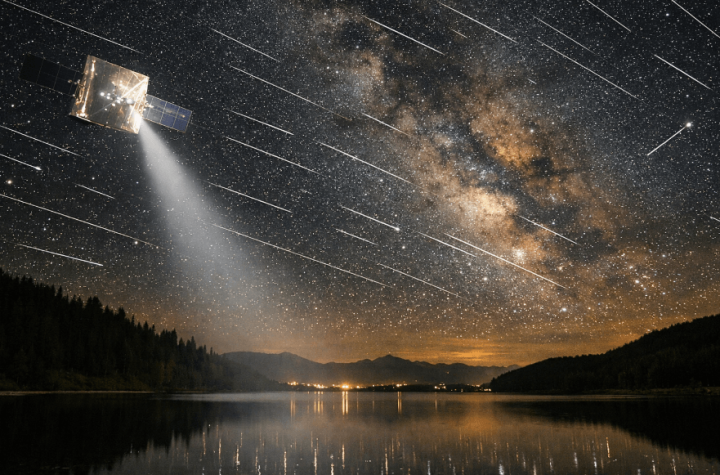
Reflect Orbital’s proposal involves satellites equipped with large mirrors capable of redirecting sunlight onto specific areas on Earth. The system could illuminate zones roughly 3 to 4 miles wide, with brightness ranging from moonlight levels to full daylight.
The company says the technology could:
- Extend solar energy production into evening hours
- Support nighttime construction and disaster response
- Provide targeted agricultural lighting
Illumination would only be deployed with approval from local authorities, according to the company.
Massive satellite expansion for space-based computing
Meanwhile, SpaceX has proposed launching up to 1 million satellites to create a space-based computing network powered by solar energy. The system is intended to handle artificial intelligence workloads while reducing the energy and cooling demands of land-based data centers—a growing concern in the U.S. as AI infrastructure expands rapidly.
However, experts say the scale of this proposal raises new environmental and astronomical concerns.
Night sky brightness already increasing
According to Ruskin Hartley of DarkSky International, even current satellite levels are altering the night sky.
“Scientific studies have already shown that existing satellites have increased diffuse night sky brightness by about 10%,” Hartley said.
Astronomers note two main effects:
- Satellites create streaks in telescope images
- Reflected sunlight contributes to overall sky glow
Dr. Miroslav Kocifaj of the Slovak Academy of Sciences estimates that satellite reflections already add measurable brightness to the night sky. By 2035, that effect could approach thresholds considered harmful for preserving naturally dark skies.
Subtle light changes may still have major impacts
While satellite-induced brightness is still far dimmer than moonlight, scientists say the key issue is biological sensitivity—not human perception.
“Circadian systems respond to light levels far below what people typically consider bright,” said Prof. Tami Martino of the University of Guelph. “Even small increases in nighttime light could ripple through ecosystems in ways we don’t fully understand.”
Health risks linked to circadian disruption
A separate letter from global sleep research organizations warned that disrupting natural light cycles could have serious health consequences.
“Circadian disruption is not a minor inconvenience,” the letter stated. “It is a physiological mechanism linked to major adverse health outcomes.”
In the U.S., where sleep disorders already affect millions of adults, researchers say additional environmental light exposure could exacerbate issues such as insomnia, metabolic disorders, and cardiovascular disease.
A changing night sky—and human experience
Experts also warn that the visual character of the night sky could change dramatically. In some locations, satellites could outnumber visible stars, fundamentally altering both scientific observation and cultural experiences tied to stargazing.
Many species—including migratory birds and certain insects—rely on natural celestial cues for navigation. Increased satellite activity could interfere with these behaviors.
Calls for environmental review and regulation
Scientists and advocacy groups are urging the FCC to conduct a comprehensive environmental review before approving large-scale deployments. Recommendations include:
- Limits on satellite reflectivity
- Caps on cumulative night sky brightness
- More research into ecological and public safety risks
Concerns also extend to potential hazards from reflective beams, including glare or unintended light exposure if systems malfunction.
Conclusion
As satellite technology advances, experts say innovation must be balanced with caution. Altering the planet’s natural light cycle could have consequences comparable to other large-scale environmental changes. For regulators and companies alike, the challenge will be ensuring that progress in space does not come at the expense of life on Earth.

“Amateur introvert. Reader. Coffee aficionado. Professional music maven. Bacon practitioner. Freelance travel nerd. Proud internet scholar.”



More Stories